
The North/South Relationship:Navigating Complexity to Unlock Opportunity
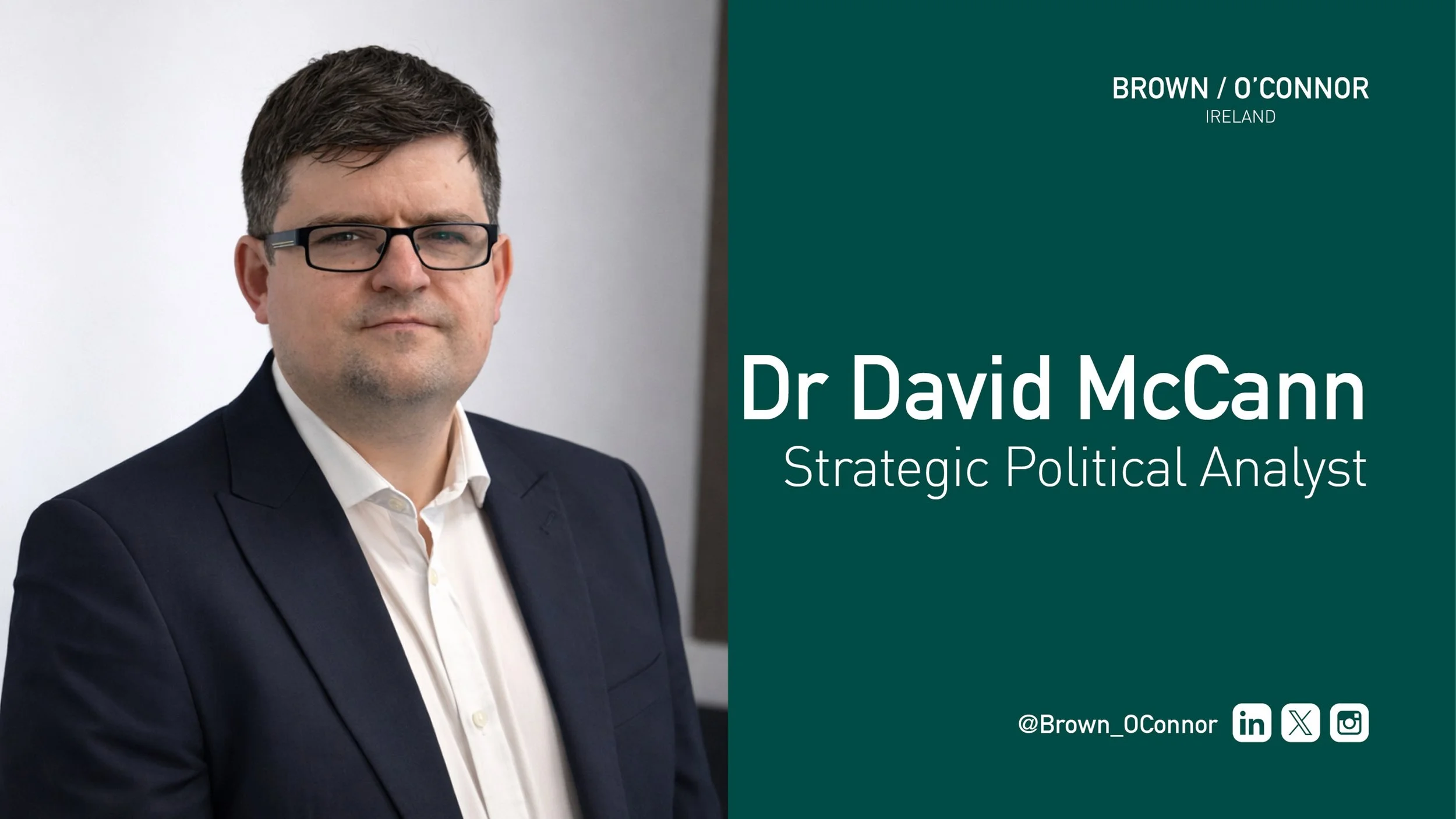
By David McCann, Strategic Political Analyst at Brown O’Connor | Ireland
“North/South makes sense” was a catchphrase we often heard in the early 2000’s whenever there was a drive to improve connectivity in the all-island economy. Dealing with two different jurisdictions is challenging in any case, but when you add the complexity of the politics between Northern Ireland and the Republic of Ireland, it can be a minefield.
Ten years ago, the UK took an incredibly consequential decision to leave the European Union. Whether you were for remaining or leaving, Northern Ireland and its relationship with the rest of the UK and the island of Ireland were massively impacted.
What was already complex is now even harder to navigate. Brexit and Northern Ireland’s unique arrangements add more complexity to the relationship. Even though the all-island economy faces challenges, it also offers significant opportunities for growth and greater prominence.
According to InterTradeIreland, the size of all-island trade has grown to €17 billion (£14.6 billion). This represents substantial growth in all-island trade over the past number of years, with further potential in the future.
Momentum on North/South Issues
When you look at some of the advances in the all-island picture, it is easier to understand why there is momentum on North/South issues. Take transport as just one example — the connectivity between cities such as Belfast and Dublin has never been better. The roads have also been transformed over the past two decades, with improvements on both sides of the border.
In 2024, another game-changer happened with the introduction of an hourly rail service between Belfast and Dublin. Since its introduction, passenger numbers have increased by more than 40 per cent. At peak times of the year, nearly 200,000 people use this route each month.
This improved connectivity provides opportunities not just for improved trade, but also for expanding the labour market as population centres such as Dublin, Dundalk, Newry and Belfast become easily commutable. Already over 18,000 people regularly cross the border for work.
Understanding the Nuances
There is genuine potential for growth if the Executive and the Irish government work together, and the various institutions, such as the North/South Ministerial Council and the Shared Island Initiative, can enhance the cooperation already underway.
Understanding the political and economic nuances of the island of Ireland can be hard. Politically in the Republic, North/South cooperation is viewed as a relatively benign issue that all major parties buy into, with varying degrees of interest.
In Northern Ireland, whilst the issue of cooperation has come a long way, it remains more politically complex. Depending on which party you are engaging with, you will get differing perspectives on the success of issues such as Dual Market Access, largely due to the two diametrically opposed views that the main parties in Stormont have over Brexit and how Northern Ireland’s position was dealt with.
Potential for Growth
Understanding these nuances is crucial for anyone in this policy area. Politics sometimes factors into North/South issues, but that does not mean that it will stagnate as a potential area of growth in the future.
The fact that the past two Irish governments have stepped up their investment in North/South cooperation speaks to the opportunities that they see in this area. Even with political disagreements, it is not uncommon to see Ministers from Northern Ireland, across the political spectrum, visiting the Republic to engage in areas of cooperation, such as healthcare and tourism.
The all-island agenda is not the only show in town, but in an increasingly uncertain global economic environment, it will remain a potential growth driver for both jurisdictions. To achieve this, we need to develop the opportunities in front of us to make the most of it.