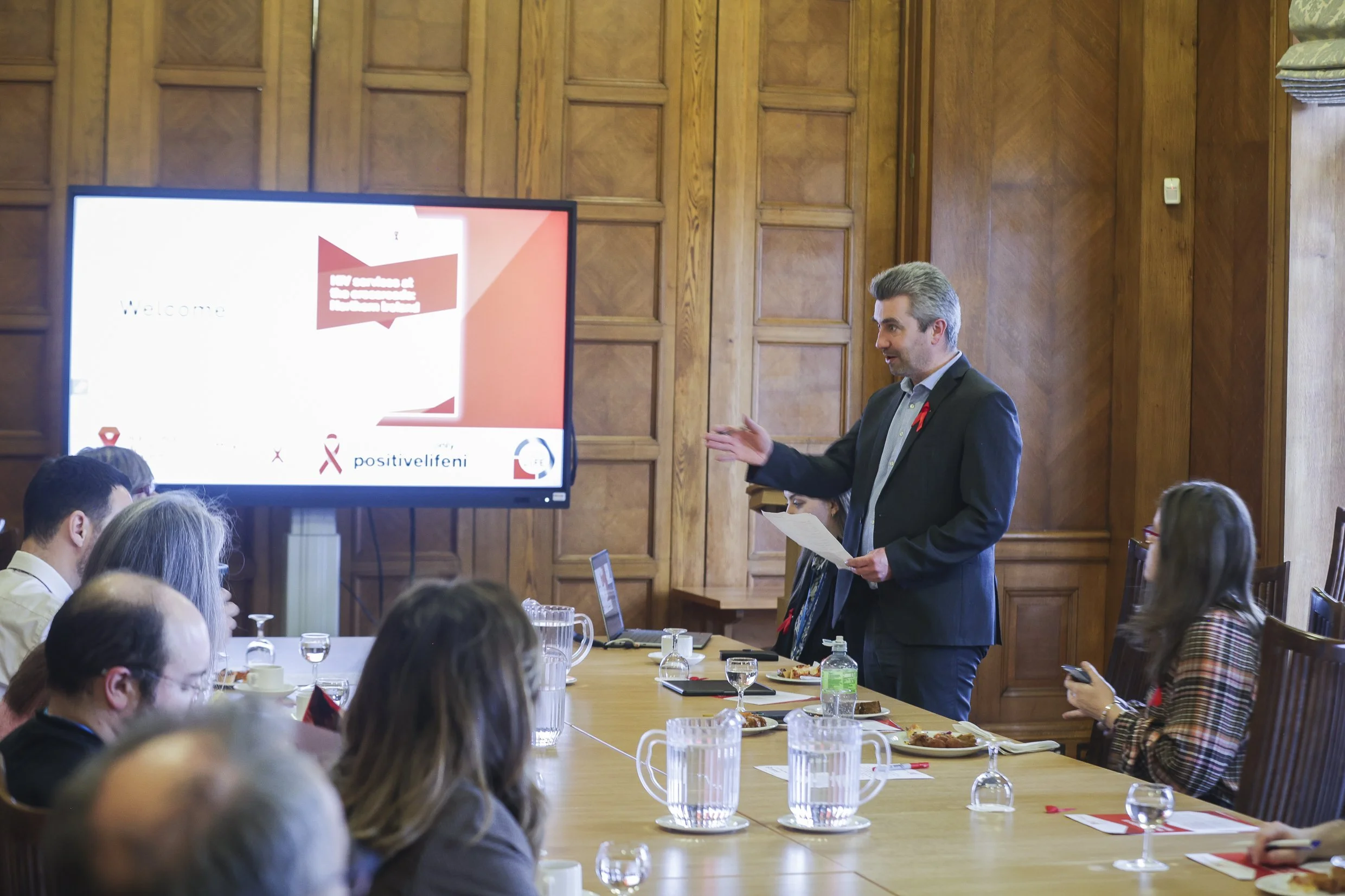
New report warns that funding threatens Northern Ireland’s target to eliminate HIV
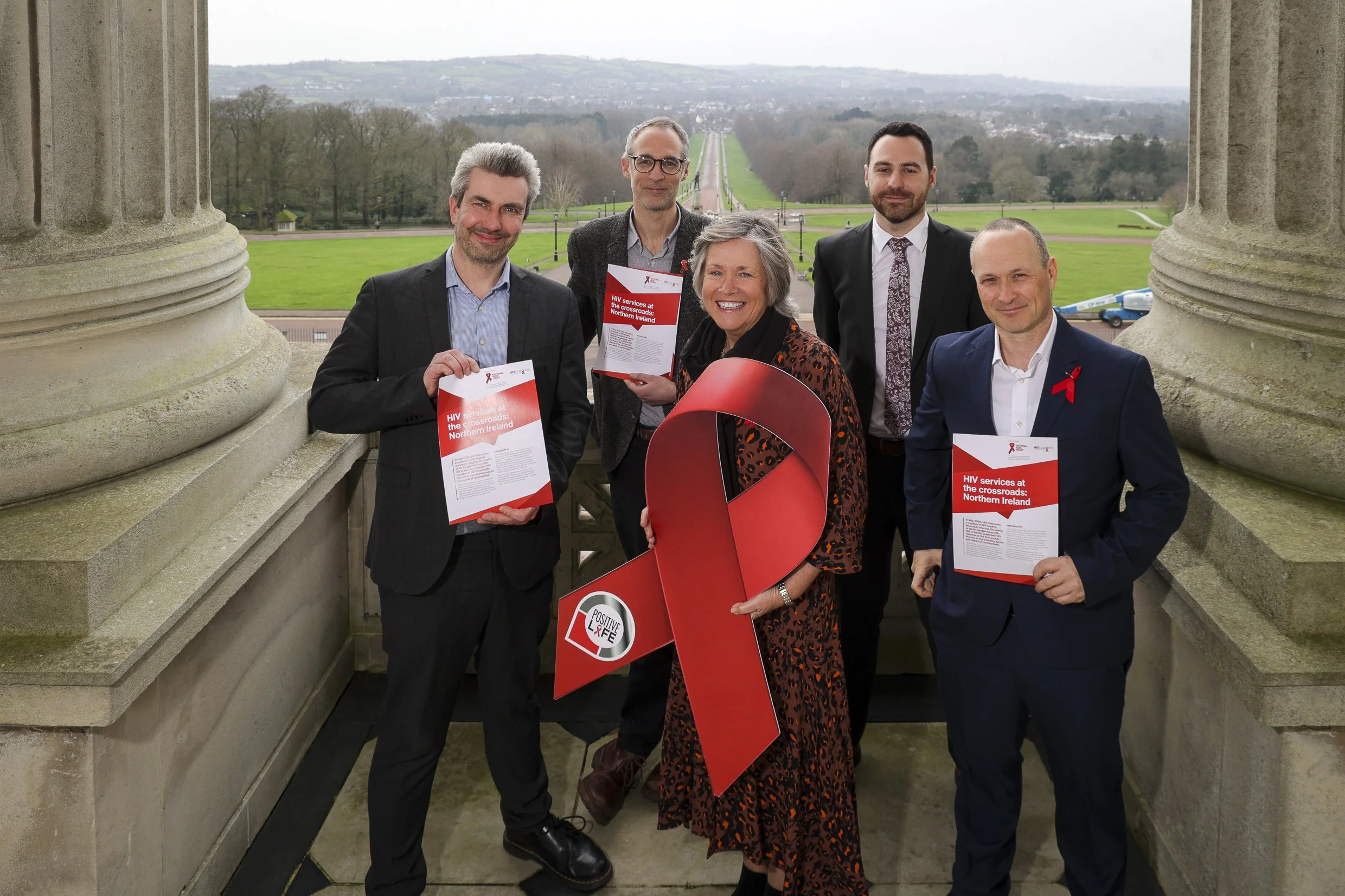
[L to R] Danny Donnelly MLA, Daniel Fluskey, National AIDS Trust, Jacquie Richardson CEO Positive Life, Dr Stephen Megarity GUM Consultant and Ian Jackson, NHS England
Northern Ireland’s target to end new HIV transmissions by 2030 is at risk – that’s the finding of a new joint briefing from a coalition of HIV experts, HIV Outcomes UK, and Positive Life NI.
However, an NHS England expert has told MLAs that opt-out blood testing in A&E could be the key to eliminating HIV in Northern Ireland.
There are around 100 new HIV diagnoses made here each year and over 1350 people living with HIV in Northern Ireland.
The briefing paper, HIV services at the crossroads: Northern Ireland, draws on a UK-wide survey of people living with HIV and insight from Positive Life, Northern Ireland’s only voluntary organisation dedicated to HIV.
The report warns that, if the current trajectory continues, without substantive action, the 2030 goal to end HIV transmission in Northern Ireland will not be met. It states the urgent need for ongoing public education, training and awareness-raising to break stigma and prevent HIV transmission. The report also highlights that funding reductions are impacting vital support services for people living with HIV.
Launching the findings at Stormont during Sexual Health Week, the briefing set out urgent recommendations for the Northern Ireland Executive to:
Deliver on the specific HIV priorities set out in the NI Sexual Health Action Plan
Launch opt-out HIV testing in Emergency Departments
Designate Northern Ireland as a UNAIDS Fast Track Region (aimed at reaching zero new HIV diagnoses by 2030)
Commit long term funding for Voluntary and Community Sector services to support people living with HIV
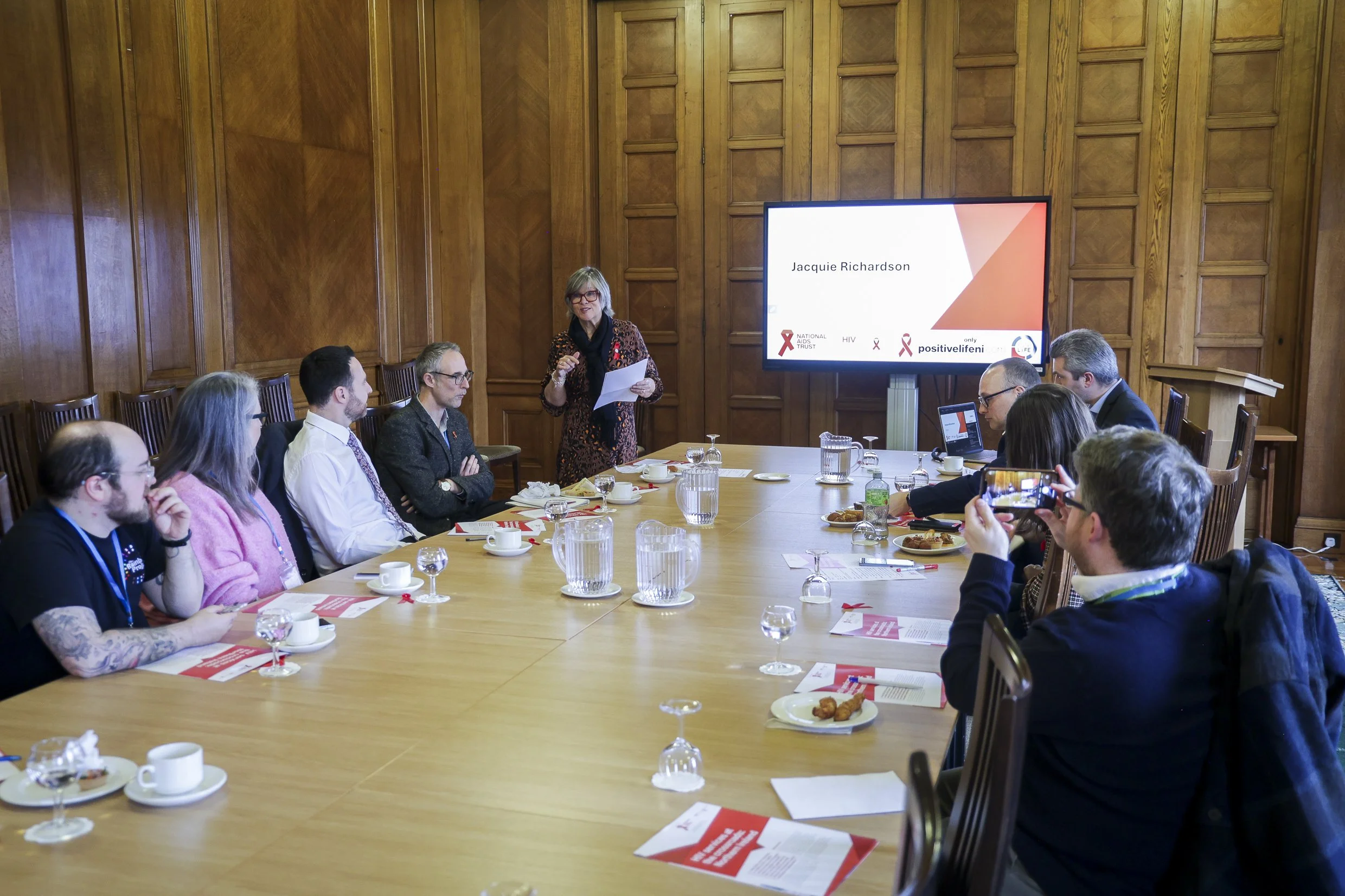
The event heard from Ian Jackson, Programme Director for HIV and Hepatitis opt-out testing programme in NHS England, who led the delivery of a pilot HIV testing programme through Emergency Departments. This was so successful in identifying people with previously undetected and untreated HIV that it has now been expanded and endorsed by UK Health Secretary Wes Streeting and is being rolled out in Scotland.
Speaking at Stormont, Ian Jackson said,
“I’m very excited about what could happen here with an opt-out testing programme, because you would be able to detect people who would not be able to be found any other way and you would be able to trailblaze globally in the eradication of HIV. Wouldn’t it be great if Northern Ireland was the first country to eradicate HIV?”
Jacquie Richardson, Chief Executive of Positive Life NI said,
“With the challenges of stigma and a close-knit community in Northern Ireland, we know there are very real issues with people accessing HIV testing. We also know that HIV is misunderstood and surrounded by outdated beliefs, which mean people don’t consider it as something which might affect them.
“With 100 new diagnoses a year here, one of the key tools to ending HIV is more extensive testing. The opt-out testing piloted in NHS England presents us with a real opportunity to eliminate HIV altogether. With a real focus on some pretty straightforward actions, we believe that it is possible for Northern Ireland be the first UK nation to end HIV, but we need the Minister to see the value of a very modest investment in this very serious public health issue for a truly transformational outcome.”
Quality of Life for those living with HIV – Community & Voluntary Sector is key
The HIV Outcomes briefing paper also concludes that delivery of an HIV Action Plan for Northern Ireland must include a long-term commitment to services aimed at improving quality of life for people living with HIV.
With case studies from people living with HIV in Northern Ireland, the briefing makes a powerful case for the crucial services, and outlines why they must be safeguarded. Local testimonials highlight the value of voluntary and community services in meeting their needs to improve their mental health and wellbeing, deal with stigma, manage their treatment and reduce social isolation. One service user in particular stated that without the support of Positive Life, they “would not be here”.
However, in the face of severe funding challenges, the continuation of these life-changing and life-saving specialist support services is under threat.
Daniel Fluskey, Director of Policy, Research and Influencing, National AIDS Trust said,
“All across the UK we see the vital role that voluntary sector services provide for people living with HIV. This is as true in Northern Ireland as it is anywhere else – the support provided by the voluntary sector is crucial for people’s wellbeing and quality of life. This report shines a spotlight on the very real funding challenges for HIV voluntary services with an urgent call that must be responded to – these services are a fundamental part of the HIV response alongside medical care.”
Jacquie Richardson, Chief Executive of Positive Life NI said,
“The value of the community and voluntary sector must be clearly understood by our decision-makers. If our services are wiped out, the result will be that people living with HIV will have higher unmet need and decreased quality of life. This in turn would shift the strain onto other, less specialist, and already overwhelmed mental health and hospital services. Services like ours are a clear part of the Minister’s Neighbourhood model of care, keeping people away from acute services and looking after them closer to home. Sustainable funding for them just makes sense.”