
Muckamore Abbey Hospital Inquiry report PUBLISHED - JUNE 2026
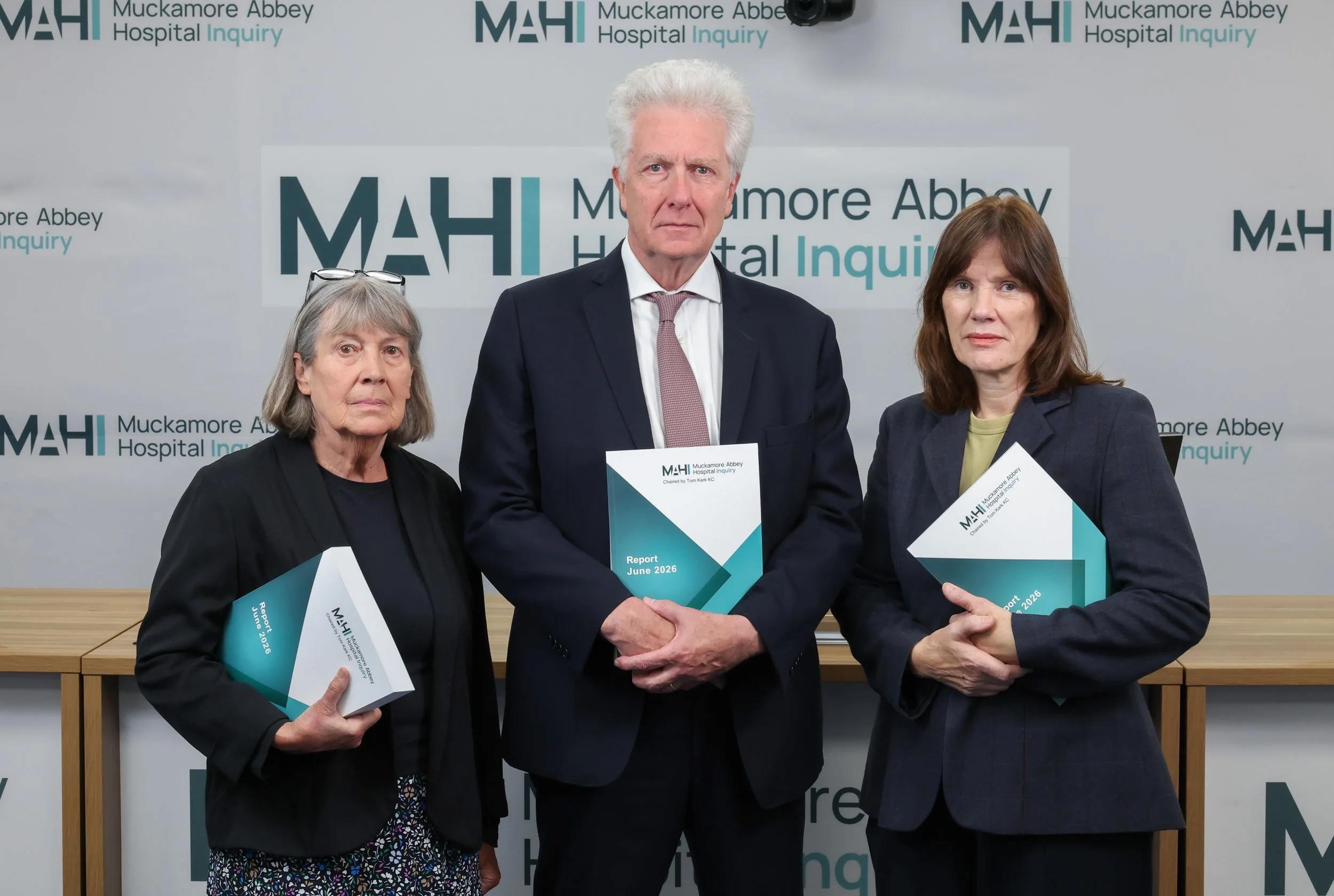
Inquiry panel, Panel Professor Glynis Murphy, Chair Tom Kark KC and Dr Elaine Maxwell
The Chair of the Muckamore Abbey Hospital Inquiry, Tom Kark KC has set out the Inquiry’s findings and recommendations to ensure that the failures identified can never be repeated.
The Inquiry Chair emphasised that the evidence heard by the Inquiry revealed profound and deeply troubling shortcomings in the care, protection, and oversight of some service users at Muckamore Abbey Hospital.
The Inquiry report lists 106 recommendations and proposes a comprehensive programme of reform in response to a profound catalogue of failures, widespread abuse, systematic failings of leadership, and the mishandling of the review of critical CCTV evidence.
The Inquiry found that the resettlement process was fundamentally flawed, external inspection regimes ineffective, and serious failures in governance within the Belfast Health and Social Care Trust (BHSCT) led directly to the erosion of safeguarding and oversight at the care facility over many years.
A central finding was that a long‑term policy shift, beginning in 2001, to move all patients with Learning Disabilities and Autism from hospital settings into community-based care, was not matched by investment. Social care funding, transition planning, and workforce strategies failed to keep pace with the scale of change.
Among the recommendations, those relating to statutory requirements include:
📌 (R61) Adult safeguarding should be regarded as a statutory function.
📌 (R104) A statutory Duty of Candour is required.
📌 (R105) It should be made easier to prosecute organisations who fail to prevent their employees causing harm to a service user.
Commenting on the series of recommendations, Inquiry Chair Tom Kark KC said:
“The report sets out 106 recommendations for reform, aimed at ensuring that services for people with learning disabilities and autistic people will be safe, compassionate, and accountable into the future. The number of recommendations reflect the depth of evidence heard and the seriousness of the failures uncovered.”
“These recommendations are designed to strengthen governance, improve safeguarding, enhance staff training and support, and embed a culture where concerns are raised, heard, and acted upon. They represent the minimum steps necessary to rebuild trust and to create a system in which the rights and safety of vulnerable people are protected without exception.”