2026: Stability, but a Year That Matters for Northern Ireland
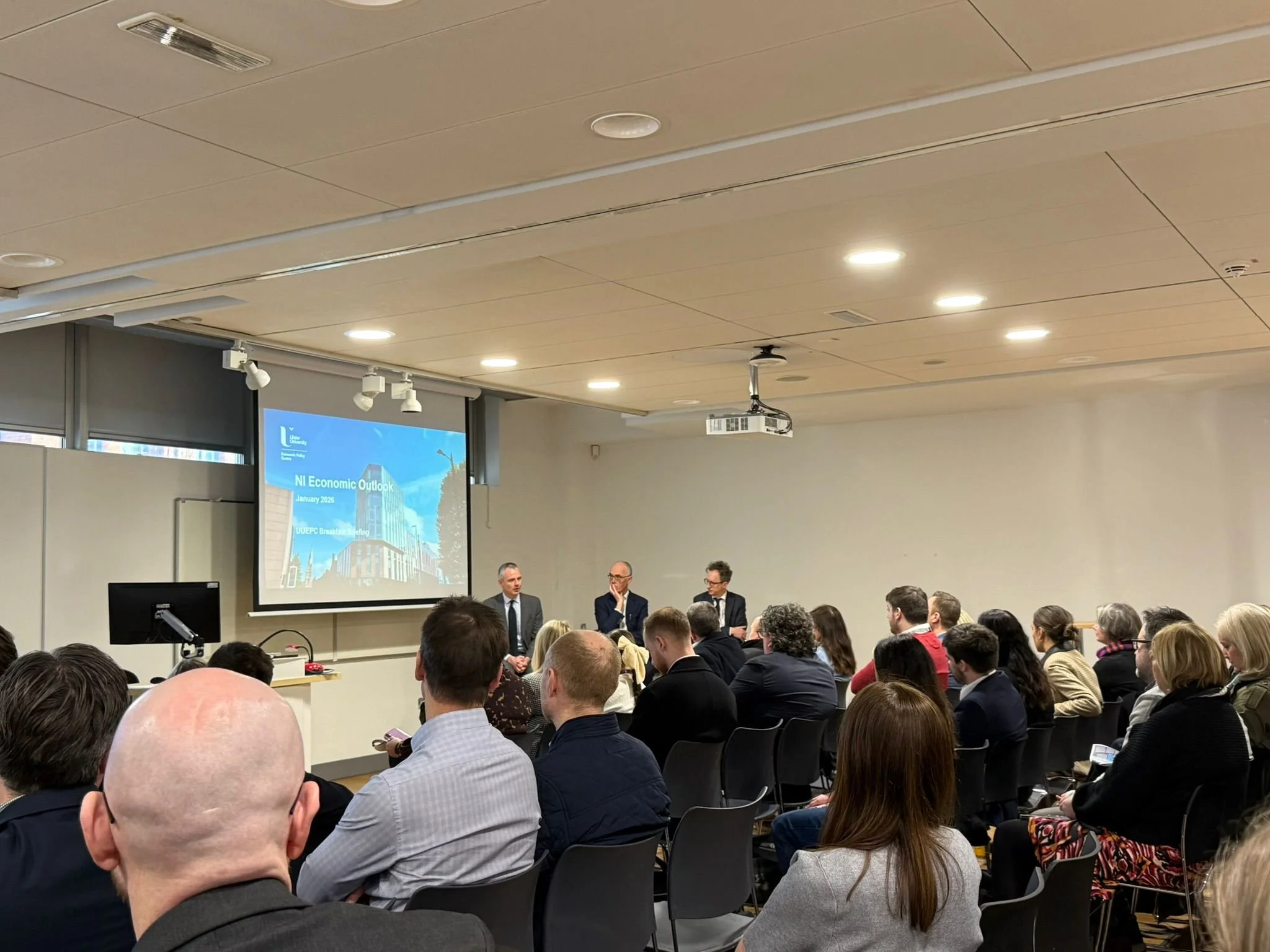
This commentary is based on insights from the Ulster University Economic Policy Centre’s Winter 2026 Outlook event and supporting analysis.
As Northern Ireland moves into 2026, the economic outlook is relatively stable, but limited. There is no expectation of a recession and growth is forecast to continue. However, that growth remains slow and is unlikely to feel transformative for most households or businesses.
Employment levels remain strong on paper. Northern Ireland has recently recorded some of the highest employee growth across the UK, driven largely by health, education and parts of the private sector. At the same time, self-employment has fallen and economic inactivity remains high. This underlines a familiar issue: more people in work has not translated into stronger productivity, higher wages or a noticeable improvement in living standards.
Interest rates have started to fall, but any real relief is expected to be gradual. Many households and businesses are unlikely to feel a significant difference until later in 2026. Most tax increases have also been delayed until 2028, meaning the short-term impact on the economy is limited. While this helps to maintain stability in the near term, it does little to address longer-standing pressures on public finances.
Where people live continues to shape economic outcomes. Belfast remains the strongest-performing area in terms of wages and productivity. Other parts of Northern Ireland are growing, but slowly, and have not closed the gap. Progress in some council areas is evident, yet differences in skills, pay and employment remain firmly in place.
Technology, including AI, is often highlighted as a future driver of growth. While it may contribute over time, it is unlikely to change the picture in the short term. Much of Northern Ireland’s economic performance will still depend on decisions around skills, infrastructure, planning and how effectively the public sector operates.
As 2026 progresses, attention will increasingly turn to the 2027 Assembly election. Party manifestos will be developed over the year, setting out priorities and ambitions. A key question is whether economic development will be treated as central to those plans, and whether proposals clearly address long-standing challenges rather than short-term pressures. The choices made in 2026 are likely to shape not just the election debate, but the direction of Northern Ireland’s economy beyond 2027.